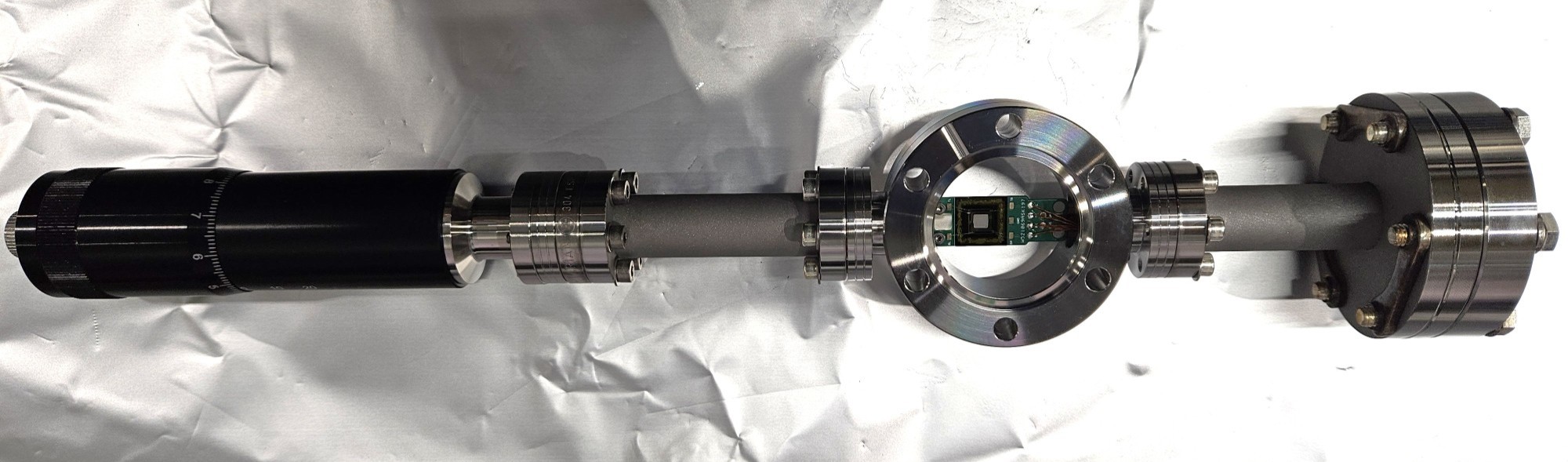
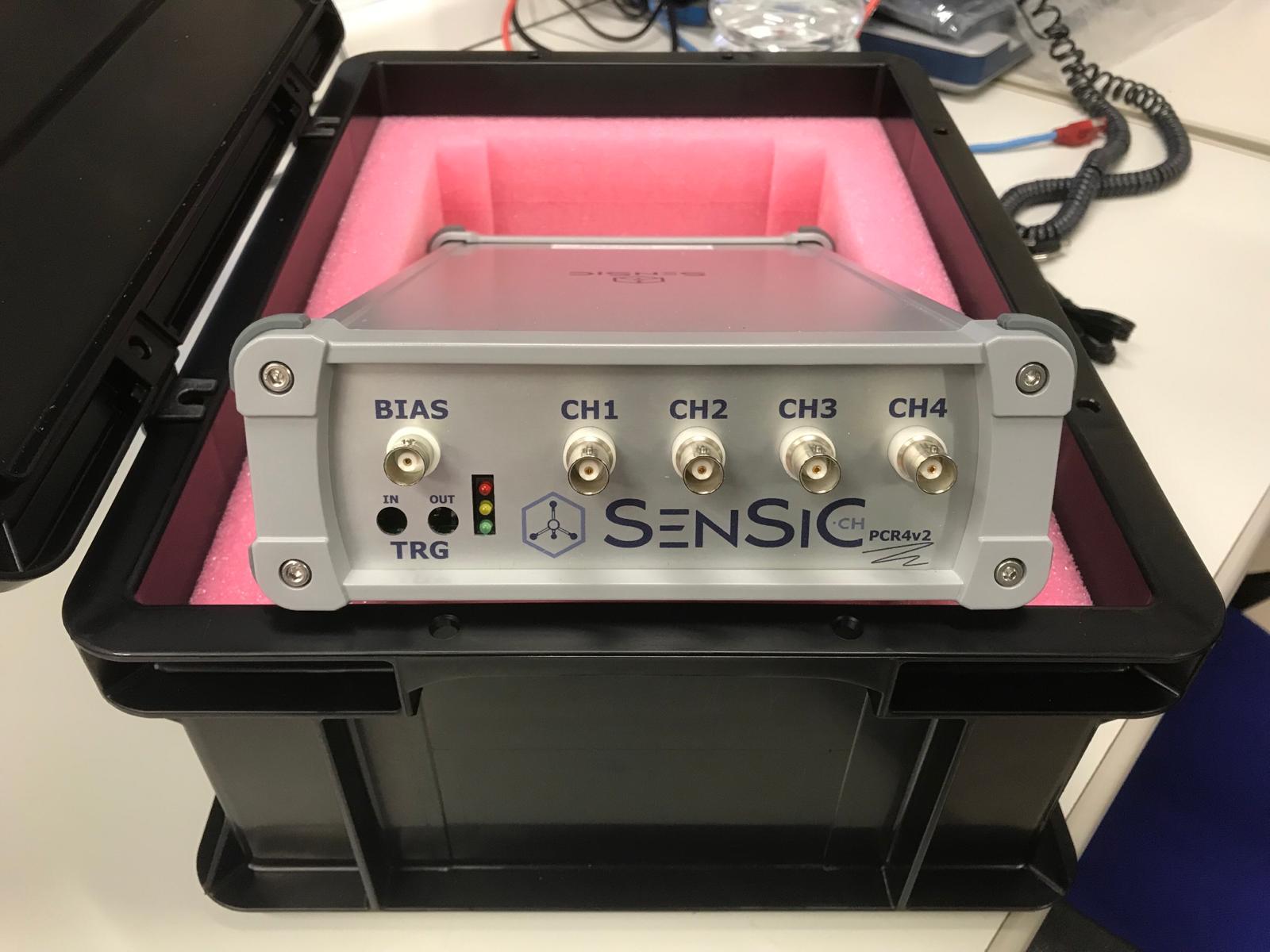
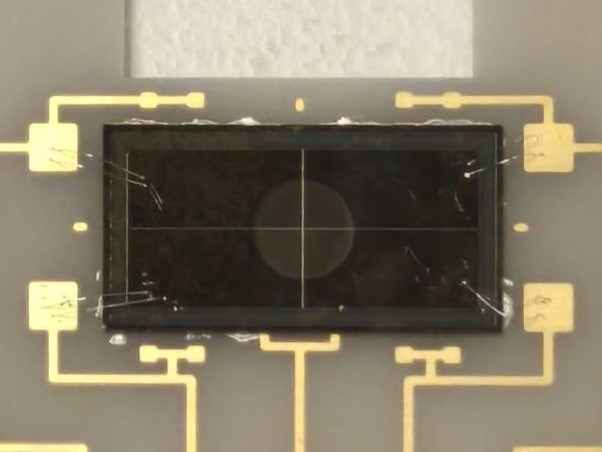
The SenSiC rXBPM is a resistive silicon carbide X-ray beam monitor designed to provide real-time information on both beam position and beam intensity in synchrotron radiation beamlines.
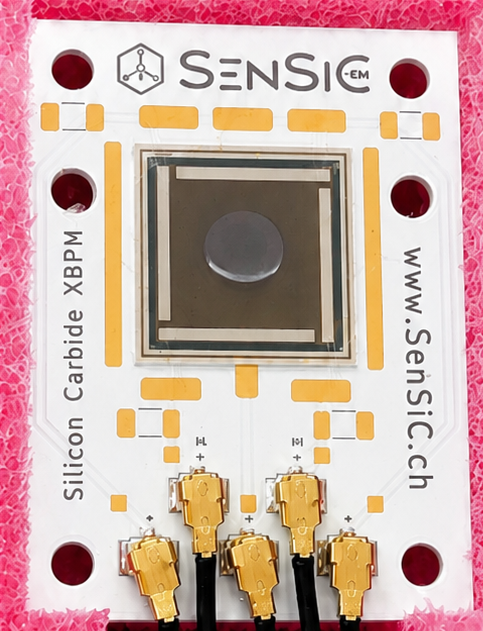
Unlike conventional segmented XBPMs, the rXBPM is based on a continuous resistive charge-division architecture. The X-ray-induced current is redistributed through a resistive p⁺-doped SiC layer and collected by four lateral electrodes, enabling beam-position reconstruction from the relative channel currents while preserving the total current as an intensity-related signal.
This architecture makes the rXBPM particularly attractive for applications where beam size, beam shape or alignment conditions may vary during operation.
Not a conventional segmented XBPM
Standard segmented XBPMs typically rely on separated electrodes or quadrants. Their position response can depend strongly on how the beam footprint overlaps the electrode geometry. As a result, the position sensitivity may change with beam size, and the linear operating region can be limited.
The SenSiC rXBPM follows a different principle. It works as a lateral-effect position-sensitive detector, where the position information is obtained from resistive charge division across a continuous active layer.
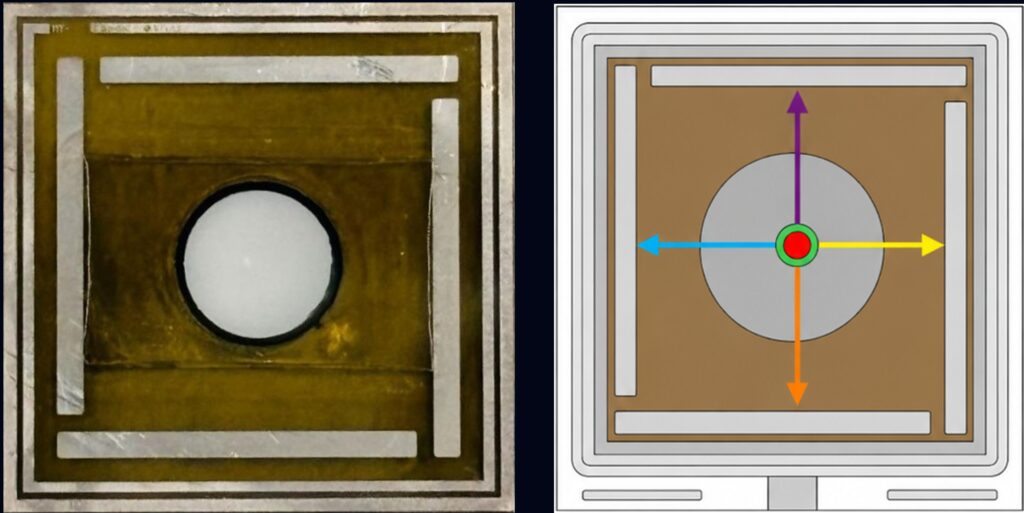
The current shared between the electrodes is used to reconstruct the beam position in both the horizontal and vertical directions. At the same time, the sum of the four electrode currents provides an intensity-related signal that can be used to monitor beam flux variations.
Unlike conventional segmented XBPMs, the SiC rXBPM does not rely on narrow gaps placed in the beam path. Its architecture allows the metallic electrodes to be positioned farther from the beam interaction region, giving access to a large and continuous SiC sensing layer. This approach reduces local wavefront perturbations caused by metallic structures and makes the device particularly suitable for beamlines where beam quality, coherence and transmission are critical.

Available membrane thicknesses
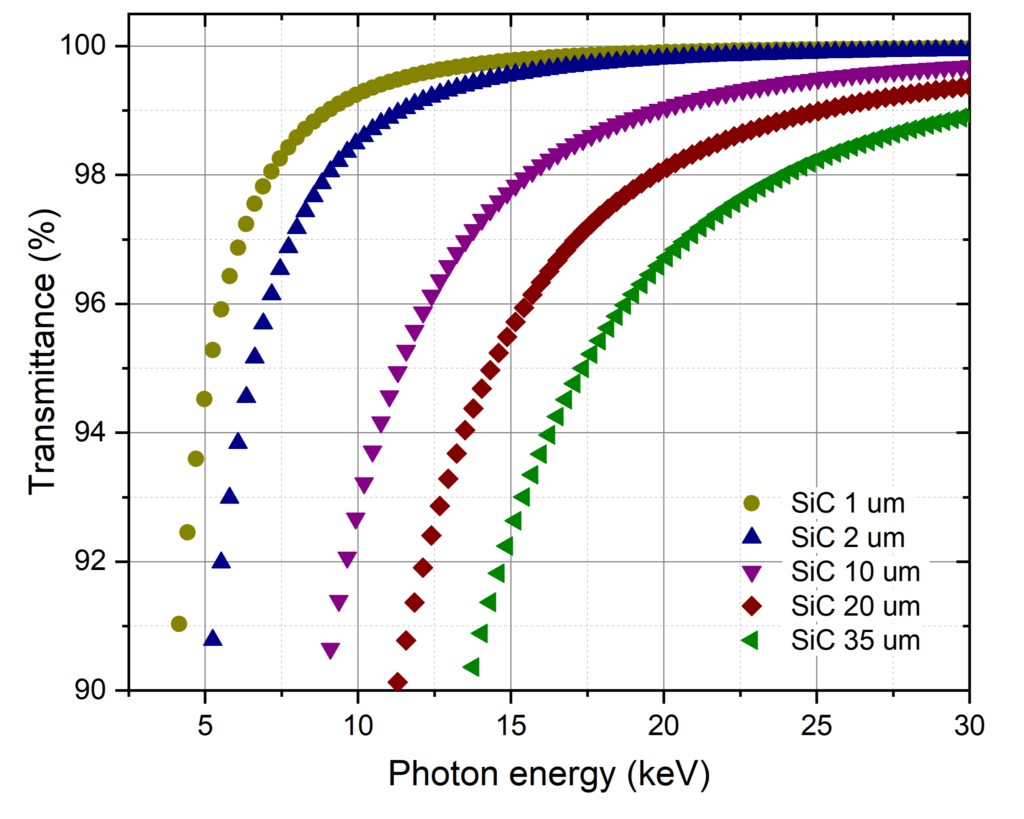
SenSiC free-standing membranes are available in different thicknesses to match the transmission, sensitivity, and mechanical requirements of each beamline application.
The SiC rXBPM is currently available only with a thickness of 10 µm, while devices featuring 1 µm, 2 µm, 20 µm and 35 µm will be soon available.
Each SiC rXBPM is characterized in-house using a 5.4 keV X-ray source to verify proper device operation before delivery. This quality-control step allows us to assess the sensor response under controlled irradiation conditions and to provide customers with essential information on the device behavior, including signal generation, uniformity, and operating recommendations.
What’s Included
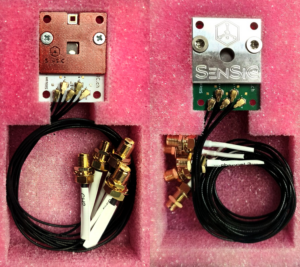
All our sensors are mounted on a 3×4 cm² aluminum-core circuit boards for easy connection, finished in FR4 or ceramic, to adapt to every specific need. The electrical connection is granted by pre-soldered UMC contacts and by UMC-SMA cables included in the package. The whole product is air- as well as UHV- (10⁻⁸ mbar) compatible.
Mounted sensors are also available with plastic or metal covers to avoid damaging the sensor surface or the wire bondings during handling and installation.
Integration with SenSiC PCR4 electronics
The rXBPM can be read out using the SenSiC PCR4 four-channel picoammeter, enabling simultaneous acquisition of the four electrode currents.
This provides a complete detector-to-electronics chain for real-time beam diagnostics. The four channel currents can be used to compute horizontal position, vertical position and total beam intensity, supporting laboratory characterization, beamline commissioning and integration into control systems.
Publications about this technology
| Trovato, G. et al. Synchrotron Radiation 33.4 (2026). DOI: 10.1107/S1600577526005242 |
Downloads