The SenSiC Silicon Carbide White-Beam Blade XBPMs are designed for synchrotron front-end applications requiring robust beam-position monitoring directly on high-power white X-ray beams.
Traditional front-end XBPMs typically use metallic blades, such as tungsten ones, positioned at the edges of the white beam. While this approach is widely established, metallic blades can be limited by high absorption, low thermal resistance and signal stability when operating close to high-brilliance insertion-device sources.
SiC blade XBPMs introduce a semiconductor-based alternative: each blade acts as an active diode detector, generating a beam-induced current that can be used for beam current tracking and beam-position reconstruction.
Why SiC blades
Silicon carbide provides a strong material platform for white-beam diagnostics.Its radiation hardness, thermal robustness and semiconductor functionality make it suitable for demanding front-end environments where the blade is exposed to intense X-ray flux and heat load.
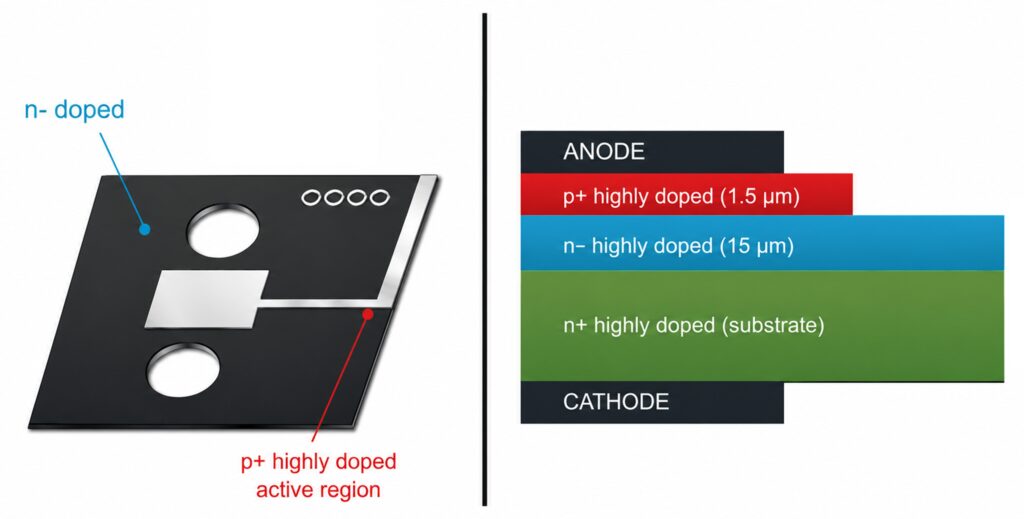
Compared with traditional tungsten blades, SiC blades may offer reduced absorption of bending-magnet background radiation and improved thermal stability of the signal. This allows the blades to be positioned closer to the photon beam, improving sensitivity and measurement precision in front-end XBPM layouts.
Image adapted from Houghton and Bobb, Proc. IBIC 2025, WEPMO05
Active semiconductor blade concept
Unlike passive metallic vanes, the SiC blade is an active semiconductor structure.
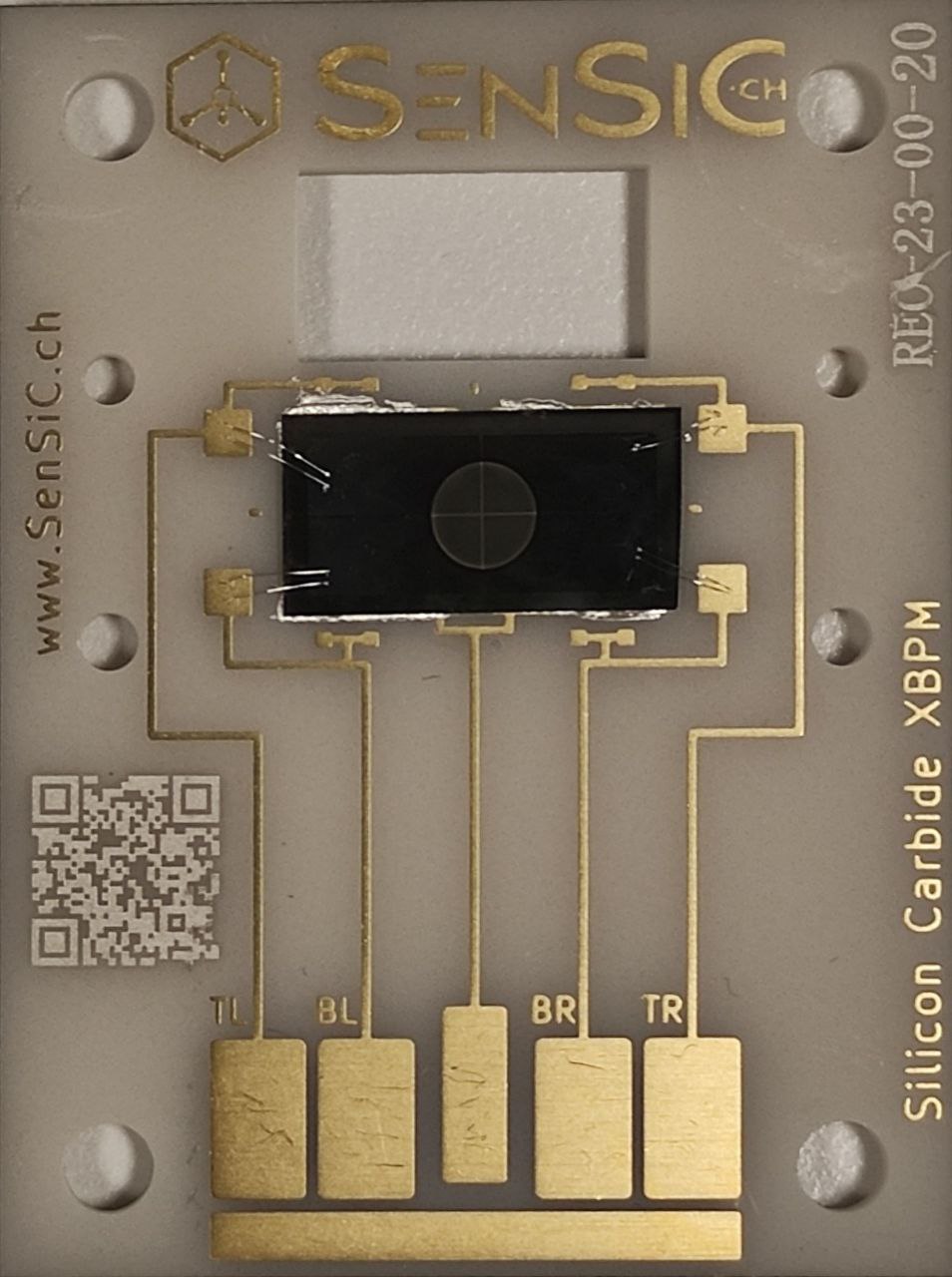
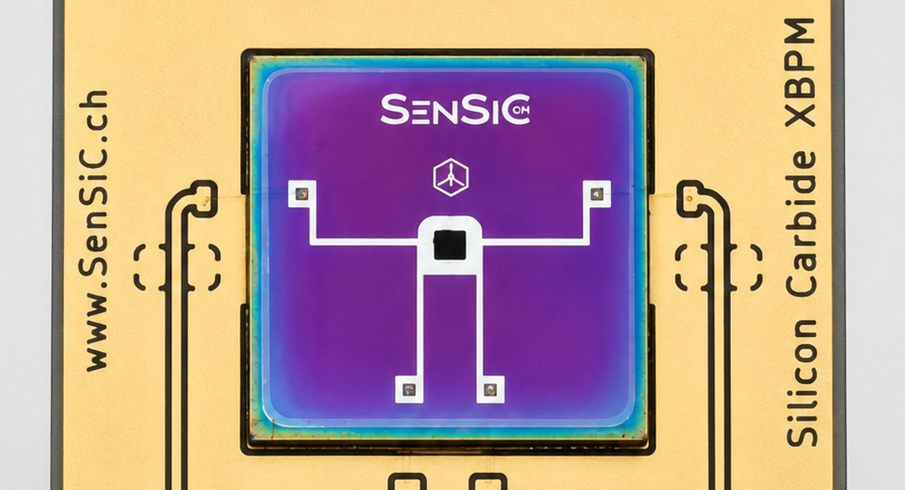
The tested prototype consisted of doped epitaxial layers forming a p–n junction, with a 15 µm n-type inactive layer and a 1.5 µm p⁺ active layer grown on an n⁺ substrate. A selective removal of the p⁺ layer at the chip edge creates an inactive border region, acting as a built-in photon filter to reduce low-energy contributions such as UV and soft X-rays. This is a very important commercial point because it shows that the SiC blade is not just a material replacement but an engineered detector structure optimized for front-end operation.
Designed to retrofit synchrotron front-ends
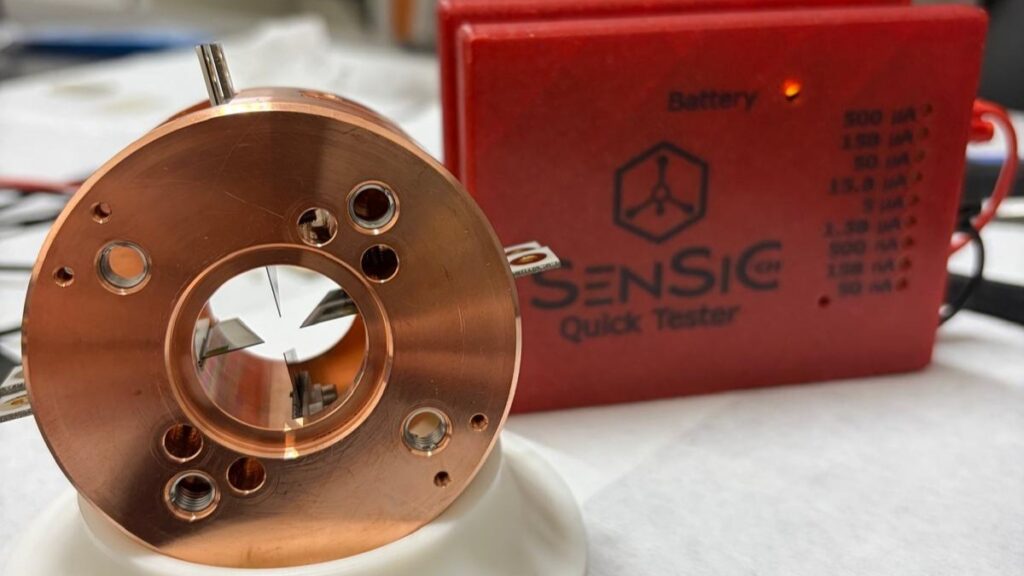
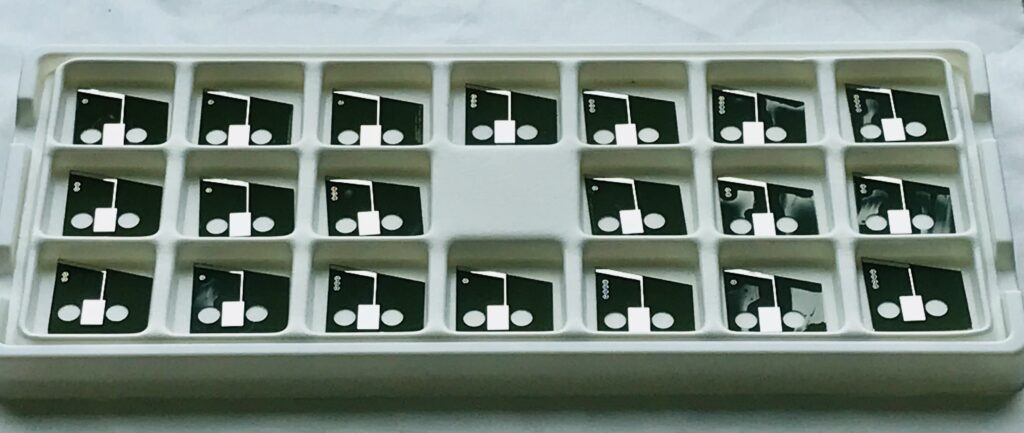
The SenSiC SiC blades are specifically designed to be compatible with the already existing FMB-Berlin detector head for ID Radiation, allowing for fast and safe mounting of the four diodes in substitution of the tungsten blades.
SiC blade XBPMs can be adapted to existing or custom front-end mechanical layouts. The blade geometry, active area, inactive border, metallization, bias configuration and electrical contacting strategy can be optimized according to beamline requirements. Particular attention is given to electrical isolation, mechanical robustness and thermal expansion management, which are critical aspects for reliable long-term operation in white-beam environments.
The system can be supplied as SiC blade components, as a blade set for integration into an existing XBPM holder, with readout electronics and technical documentation.
Compatible with low-noise current readout electronics
Each SiC blade generates a current signal that can be acquired using low-noise current readout electronics.
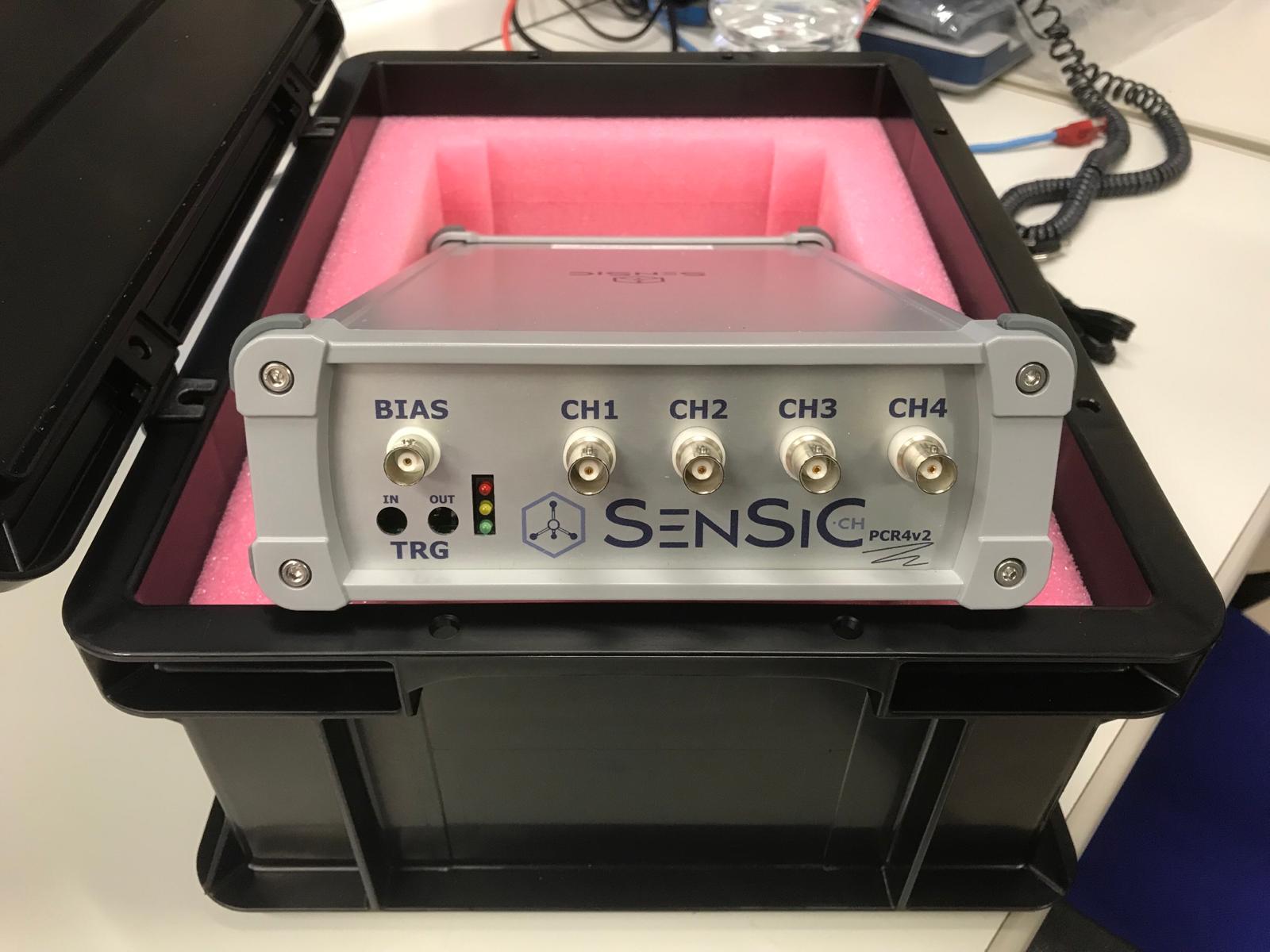
The SenSiC PCR4 has a current reading channel specifically realized for high current generating scenarios, such as the exposure of a SiC to a white beam right after the insertion device, allowing the reading of up to 50 mA of beam-induced current per channel.
Multi-channel acquisition enables simultaneous readout of the blade currents for total current monitoring and position reconstruction. The readout chain can be configured according to the expected current range, acquisition speed and beamline control-system requirements, being compatible with EPICS, TANGO or PYTHON.
Publications about this technology
| Houghton, C. and Bobb, L., Proc. IBIC 2025, WEPMO05. DOI: 10.18429/JACoW-IBIC2025-WEPMO05 |
| Nadolski, L., et al., Proc IPAC25, MOPB074. DOI: 10.18429/JACoW-IPAC2025-MOPB074 |